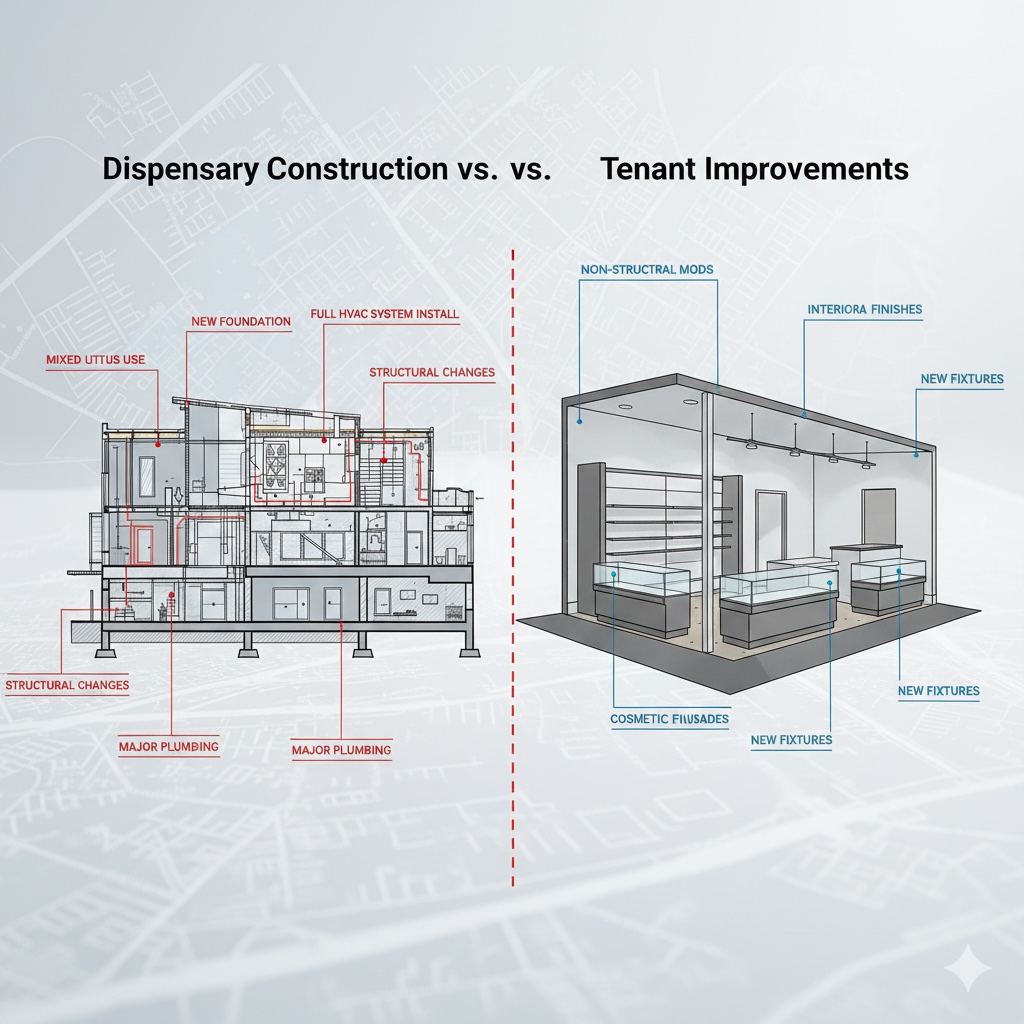
Tenant Improvements
Dispensary Construction vs Tenant Improvements: What License Holders Need to Know
An explanation of how dispensary construction differs from standard tenant improvements, and what license holders should understand before signing a lease or starting a build-out.
Article Summary
- Dispensary speed is driven by layout and construction, not decor
- Most slow dispensaries were designed for aesthetics instead of flow
- Customer bottlenecks usually form at entry, menu viewing, and checkout
- Designing for speed improves revenue without increasing staff
Reality
Good Design Does Not Always Mean Fast Design
Many dispensaries look impressive but operate slowly.
Long waits, crowded lobbies, and overworked staff are often symptoms of design decisions made during construction.
Visual appeal does not compensate for poor circulation, inefficient counters, or unclear customer flow.
High-performing dispensaries prioritize speed first and layer aesthetics on top.
Flow
Designing for Predictable Customer Movement
Fast dispensaries move customers through the space with minimal friction.
Entry points, ID checks, menu visibility, ordering, and exits must be aligned in a logical sequence.
Confusing layouts force staff to direct traffic manually, slowing transactions.
Clear, intuitive flow reduces congestion and improves throughput during peak hours.
Counters
Transaction Areas That Support Speed
Counter design directly impacts transaction time.
Insufficient counter space, poor spacing between stations, and awkward reach zones slow staff down.
ADA requirements also influence counter height and spacing, which must be accounted for during design.
Well-designed transaction areas allow multiple customers to be served simultaneously without interference.
Staffing
Reducing Staff Movement and Fatigue
Every extra step a budtender takes adds time to each transaction.
Storage, display, POS, and handoff areas should be positioned to minimize unnecessary movement.
Layouts that reduce walking distance increase transaction speed without increasing headcount.
Efficient designs also reduce staff fatigue over long shifts.
Security
Speed Must Still Align With Compliance
Designing for speed does not mean compromising security.
Controlled access, camera sightlines, and secure product handling zones must remain intact.
The fastest dispensaries integrate security seamlessly into the layout rather than treating it as a constraint.
Poor integration often leads to inspection issues or operational slowdowns.
Performance
Speed as a Competitive Advantage
Faster dispensaries serve more customers during peak hours without sacrificing compliance or experience.
Speed improves customer satisfaction, reduces wait times, and increases revenue per square foot.
Design decisions made during construction continue to affect performance long after opening.
Dispensaries built for speed consistently outperform those built for looks alone.
-
25–40%Throughput difference driven by layout
-
FewerStaff required during peak hours
-
MinutesSaved per transaction
-
HigherRevenue per square foot