Learn
Back-of-House Layouts That Reduce Compliance Risk
A breakdown of how back-of-house layout decisions affect dispensary compliance, inspections, and daily operations, and why poor internal flow is a common source of regulatory issues.
Article Summary
- Back-of-house areas are heavily scrutinized during inspections
- Layout determines how inventory, staff, and access are controlled
- Poor internal flow increases compliance and security risk
- Fixing layout issues after construction is costly and disruptive
Overview
Why Back-of-House Layout Matters in Dispensary Architecture
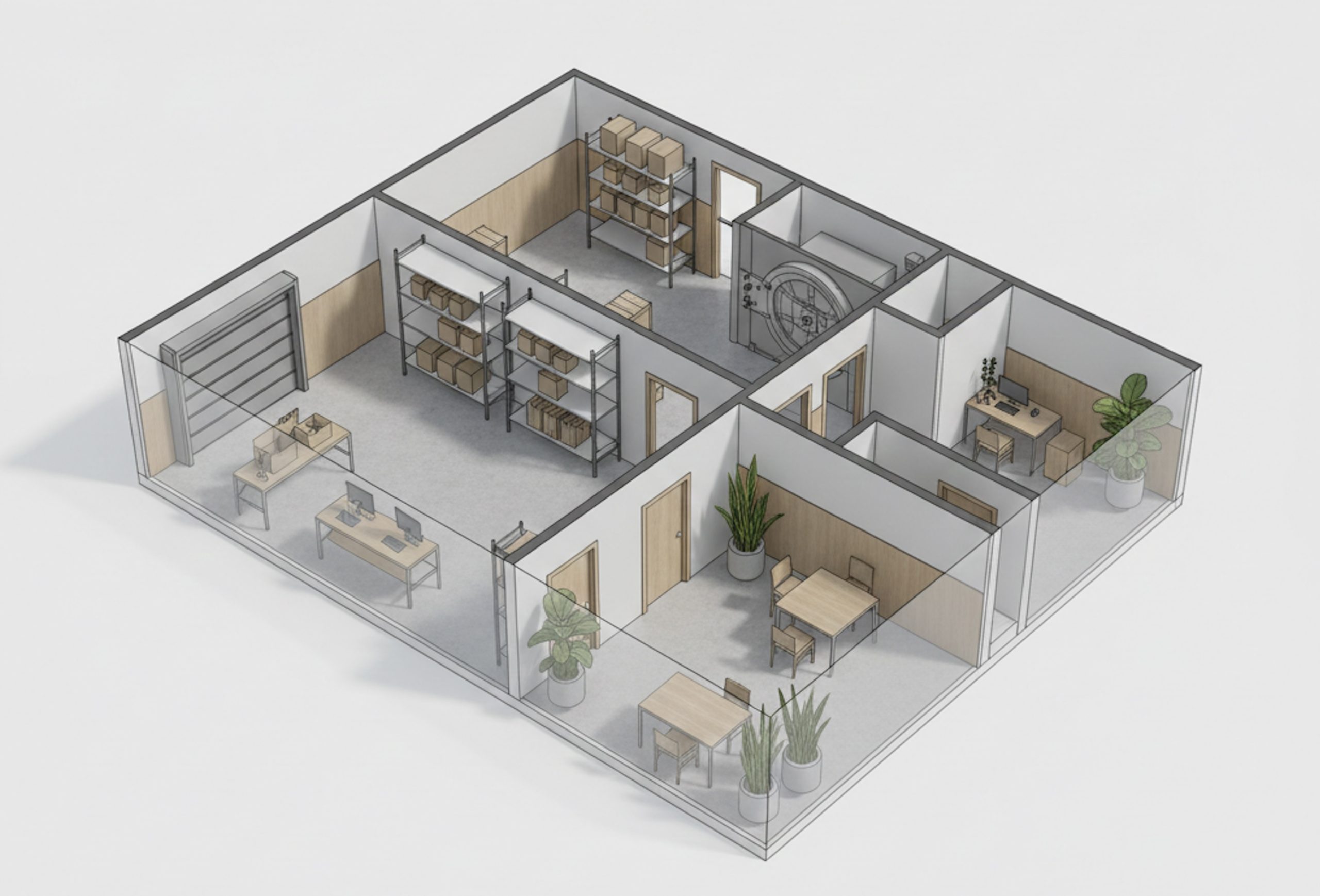
Back-of-house spaces are where most compliance-sensitive activities occur.
This includes receiving, storage, vault access, and administrative handling.
Regulators evaluate whether these areas are logically organized,
properly separated, and physically controlled.
The architectural layout determines whether compliance is enforceable.
Flow
Designing Clear and Controlled Internal Flow
Inventory, staff, and restricted access must move through
the back-of-house in a predictable and controlled manner.
Poorly planned circulation paths increase the risk
of unauthorized access and inventory handling errors.
Clear flow reduces reliance on procedural controls.
Receiving
Separating Receiving From Storage and Sales Areas
Receiving areas should be physically separated
from sales floors and public access.
Inspectors often look for clear demarcation
between delivery intake, storage, and retail operations.
Shared or exposed receiving zones create compliance risk.
Storage
Organizing Storage and Vault Access
Storage rooms and vaults must be positioned
to limit unnecessary movement through the facility.
Excessive travel paths or shared corridors
increase exposure and inspection scrutiny.
Efficient placement supports security and accountability.
Staff
Designing Staff-Only Areas That Support Compliance
Staff workspaces, offices, and break areas
should be clearly separated from inventory handling zones.
Mixing functions within the same space
creates ambiguity during inspections.
Architectural separation simplifies enforcement.
Inspection
How Inspectors Evaluate Back-of-House Layout
Inspectors assess whether back-of-house areas
logically support secure handling and recordkeeping.
Layout clarity, access control, and visibility
all factor into approval decisions.
Disorganized layouts often trigger correction notices.
Architecture
Back-of-House Layout as a Compliance Tool
Back-of-house design is not an operational afterthought.
It is an architectural tool that enforces compliance
through physical structure.
Getting this right during planning reduces ongoing risk
and inspection friction.
-
FlowControls inventory movement
-
SeparationReduces compliance ambiguity
-
InspectionLayouts are closely evaluated
-
CostErrors are expensive to fix