Learn
How to Reinforce Dispensary Storefront Glass for Security and Compliance
A step-by-step overview of how dispensaries reinforce storefront glass to prevent break-ins and reduce risk.
Article Summary
- Dispensary storefront glass must be reinforced to deter forced entry
- Security window film is a common reinforcement method, not a standalone solution
- Proper installation is critical for effectiveness and inspection outcomes
- Reinforced glazing works best as part of a layered security system
Overview
What “Reinforced Glass” Means in Dispensary Construction
In cannabis retail, reinforced glass does not usually mean thicker glass.
Most dispensaries reinforce existing storefront glazing using security window film
or laminated glazing systems designed to resist shattering and forced entry.
The goal is not to make glass unbreakable, but to delay intrusion long enough
for alarms, cameras, and response systems to activate.
Materials
Common Methods Used to Reinforce Dispensary Glass
The most common reinforcement method is security window film, also known as
impact-resistant or anti-shatter film.
This is a thick, transparent polyester film applied directly to the interior
surface of existing glass.
Higher-security installations may also use laminated glass or glazing systems
with anchoring frames that hold the glass together under impact.
Function
How Security Window Film Actually Works
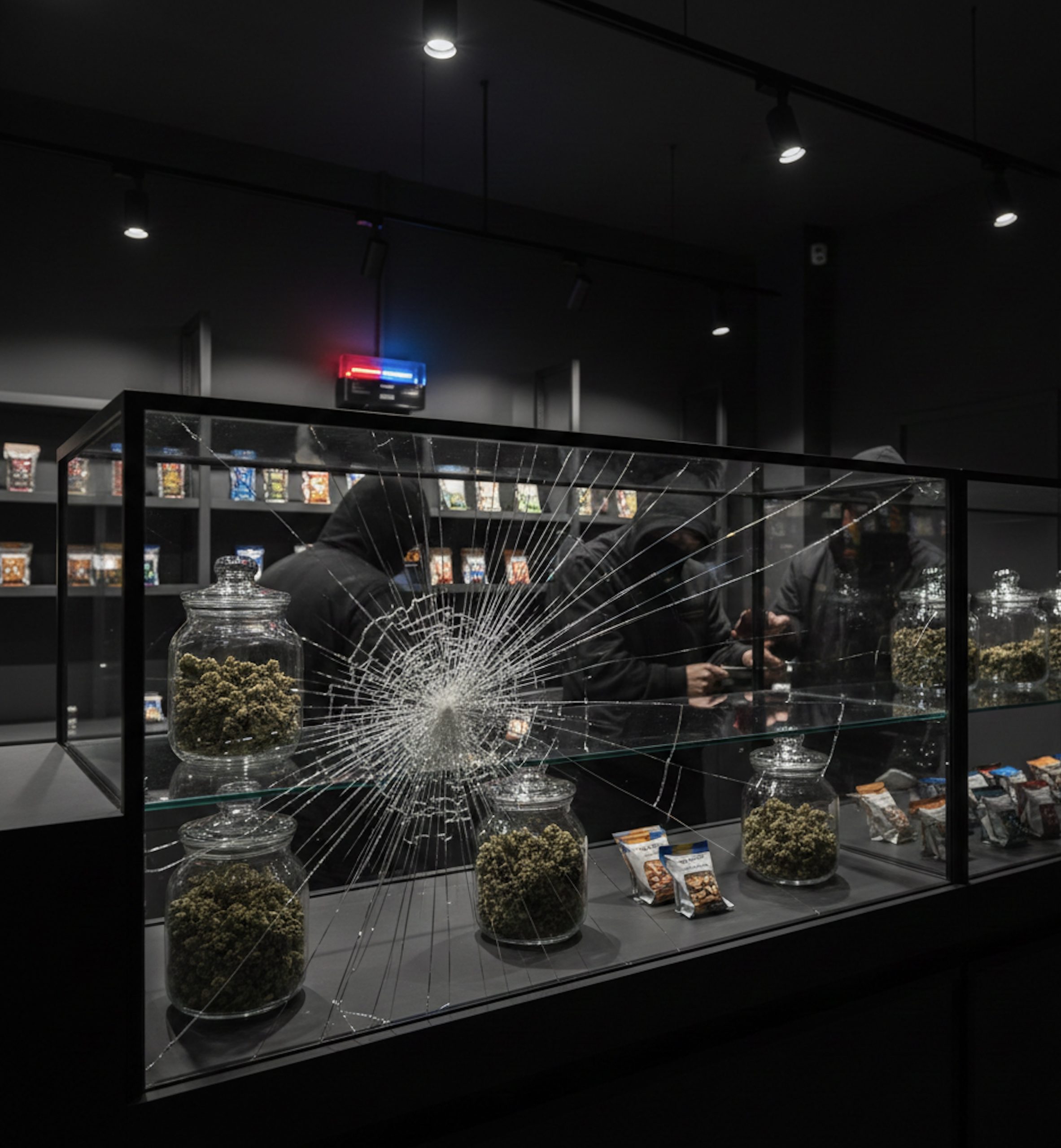
Security film does not prevent glass from cracking.
Instead, it holds the glass together after impact.
When struck, the glass may break, but the film keeps it intact,
making it difficult to penetrate quickly.
This delay is critical in retail cannabis, where smash-and-grab
attempts rely on speed.
Installation
Why Proper Installation Matters More Than Film Thickness
Security film is only effective if it is properly installed.
Poor edge anchoring, improper curing, or incorrect surface preparation
can allow the glass to separate from the frame under force.
In dispensaries, film should be mechanically or structurally anchored
to the window frame to prevent peel-away failures.
Compliance
How Reinforced Glazing Supports Regulatory and Insurance Requirements
Many jurisdictions and insurers expect dispensaries to demonstrate
reasonable physical security measures.
Reinforced storefront glass is often reviewed during inspections,
licensing approvals, and insurance underwriting.
While requirements vary by jurisdiction, reinforced glazing is commonly
viewed as a baseline deterrent for street-facing windows.
Integration
Reinforced Glass Is Not a Standalone Security Solution
Reinforced glass works best when paired with alarms, access controls,
cameras, and proper lighting.
The purpose of glass reinforcement is delay, not total prevention.
When combined with layered security systems, reinforced glazing
significantly reduces the success rate of forced-entry attempts.
Maintenance
Ongoing Inspection and Replacement Considerations
Over time, security film can degrade due to UV exposure, temperature changes,
or physical damage.
Dispensaries should periodically inspect reinforced windows and replace film
when bubbling, peeling, or delamination occurs.
Maintenance ensures continued effectiveness and avoids inspection issues.
-
DelaySlows forced entry
-
DeterrenceReduces smash-and-grab risk
-
ComplianceSupports inspections and insurance
-
IntegrationWorks with layered security