Learn
Tenant Improvements vs Ground-Up Construction for Dispensaries
A practical comparison of tenant improvements and ground-up construction, and how each path affects cost, timelines, risk, and regulatory complexity for dispensary operators.
Article Summary
- Tenant improvements and ground-up builds carry very different risks
- Timelines are driven more by approvals than construction type
- Existing buildings introduce hidden constraints
- Ground-up construction offers control but increases complexity
Overview
Two Very Different Paths to Opening a Dispensary
Dispensaries are typically built using one of two approaches.
Either an existing retail space is converted through tenant improvements,
or a new building is constructed from the ground up.
Both options can succeed, but they introduce different timelines,
costs, and regulatory considerations.
Tenant Improvements
What Tenant Improvements Actually Involve
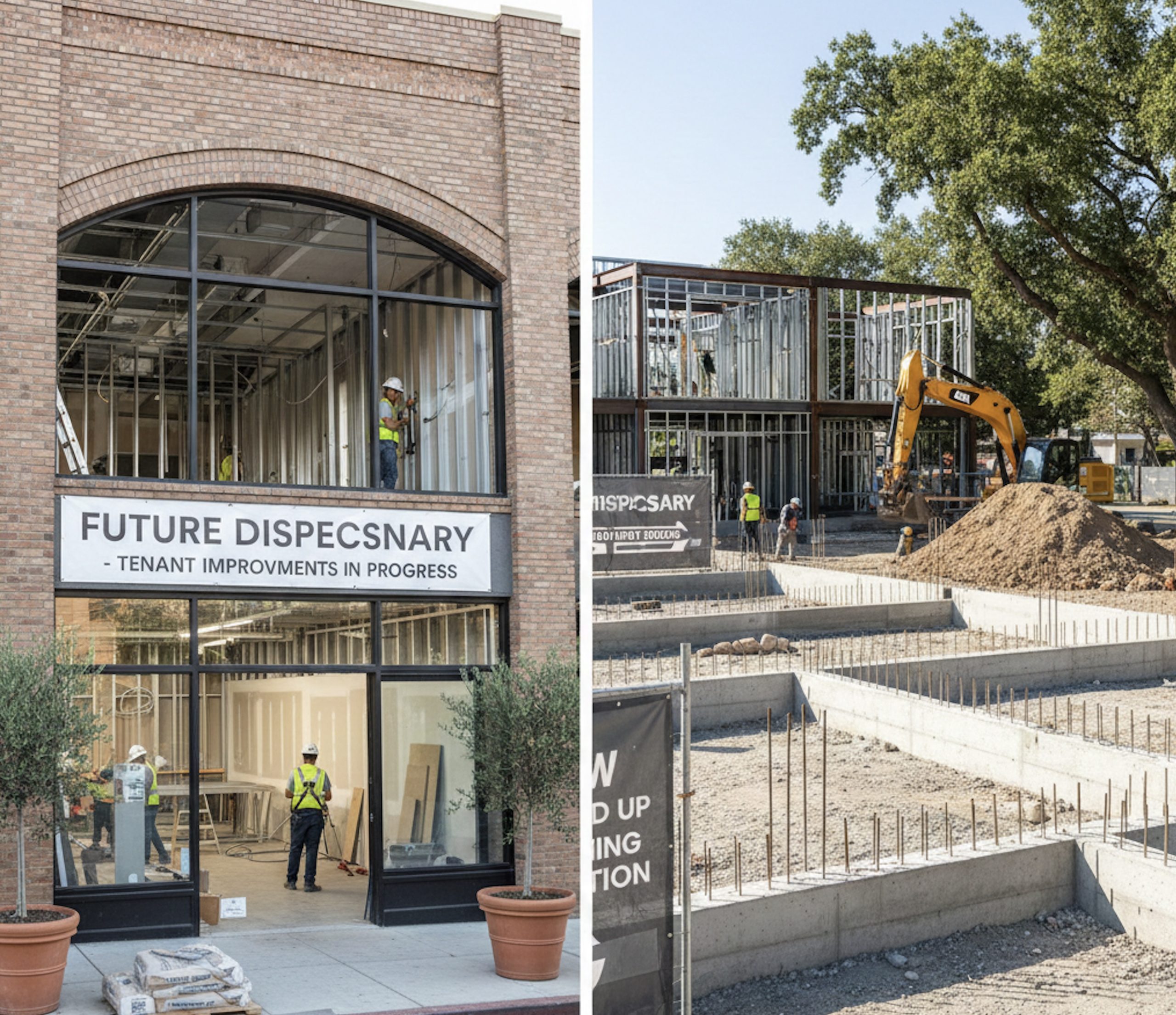
Tenant improvements adapt an existing space
to meet dispensary requirements.
While this approach can reduce upfront construction scope,
it often introduces hidden constraints such as
structural limits, outdated systems, and landlord restrictions.
Constraints
The Hidden Tradeoffs of Existing Buildings
Existing buildings were rarely designed
for regulated cannabis retail.
Ceiling heights, column placement, utilities,
and access points can limit design options.
These constraints often surface late in the process.
Ground-Up
Why Some Operators Choose Ground-Up Construction
Ground-up construction allows full control
over layout, security, and infrastructure.
This flexibility can simplify compliance
and reduce long-term operational friction.
However, it introduces additional approvals and cost exposure.
Timeline
How Build Type Impacts Timelines
Tenant improvements are often assumed to be faster,
but permitting and inspection timelines
can erase that advantage.
Ground-up projects take longer upfront,
but may encounter fewer midstream design revisions.
Risk
Risk Profiles Are Very Different
Tenant improvement projects carry discovery risk,
where unknown conditions trigger changes.
Ground-up projects carry execution risk,
where scope and coordination drive outcomes.
Understanding these risks informs better decisions.
Decision
Choosing the Right Approach for Your Dispensary
The right build approach depends on location,
timeline tolerance, capital structure,
and long-term operational goals.
There is no universal best option,
only the option that aligns with your constraints.
-
ControlHigher with ground-up builds
-
ConstraintsMore common in TI projects
-
TimelineDriven by approvals
-
RiskDifferent, not lesser