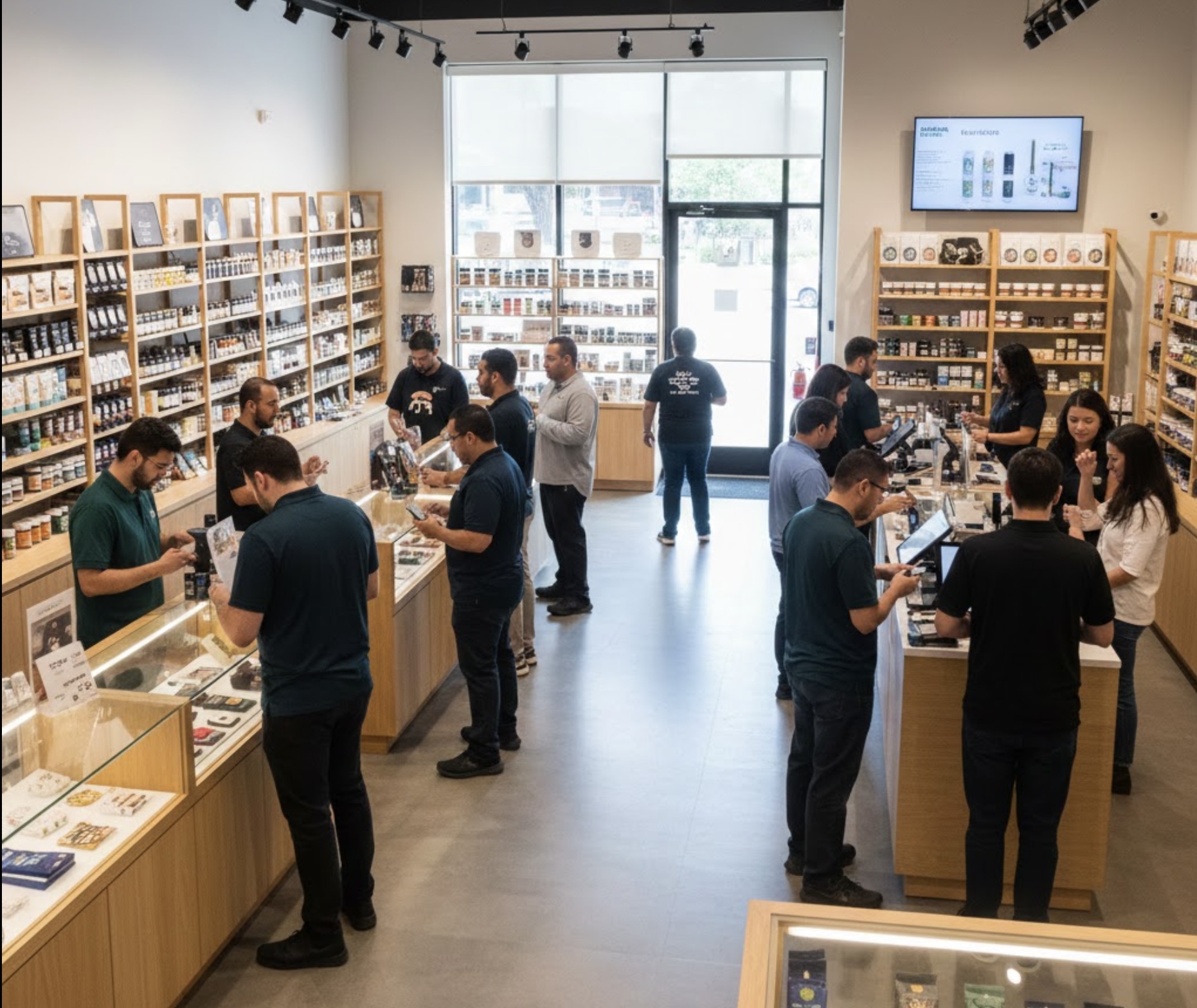
What Makes a Dispensary Feel Busy Even When It Is Not?
- Perceived “busyness” is created by movement, sound, density, and flow, not headcount
- Customers interpret energy as trust, safety, and demand
- Small changes to staff positioning, lighting, and queue design can change the entire feel of the store
- Experience-driven activation beats “waiting for traffic” during slow periods
- Events and vendor presence can create momentum without relying on discounts
Why Does a Busy Dispensary Feel More Trustworthy?
Customers use simple signals to decide whether a dispensary feels established, safe, and worth engaging with. A store that feels silent and still can feel empty, even if the business is healthy.
Most customers interpret “busy” as a combination of motion, sound, and social proof. The goal is not to fake traffic. The goal is to build visible momentum.
- Movement signals organization and purpose
- Sound reduces the perception of emptiness
- Density creates visual fullness
- Flow reduces awkwardness and hesitation
What Staff Behaviors Make a Store Feel Dead?
Most dispensaries lose energy because staff unintentionally create “stillness.” When employees cluster, lean, or stand still, the store feels like nothing is happening.
- Employees grouped behind the counter with no purpose
- Long gaps with no greetings or movement
- Budtenders looking down at screens instead of scanning the floor
- Staff waiting for customers to initiate interaction
Energy is a rhythm. The store should have visible motion even when it is slow.
How Do You Make a Dispensary Feel Busy During Slow Hours?
This is a practical operating checklist. It creates motion and momentum without adding payroll or relying on promotions.
- Assign one person to “floor presence” so customers always see movement
- Break up staff clustering by creating clear zones of responsibility
- Use a consistent greeting cadence so every entry creates a moment
- Keep one visible task active (stocking, cleaning glass, merchandising, organizing displays)
- Create micro-interactions: questions, recommendations, and quick product education
- Keep the front-of-house visually active with small changes each day
- Train posture and positioning so staff face outward, not inward
If your layout creates natural dead zones, review your traffic path and queuing approach. Store flow impacts perceived energy more than most operators realize.
Related reading: how to design a dispensary floor plan that passes inspection.
How Do Music and Lighting Change the Perception of Traffic?
Two stores can have the same number of customers and feel completely different. The difference is often sound and lighting.
| Music | Sets pace, reduces silence, makes the room feel occupied |
| Lighting | Controls warmth, comfort, and the perceived “activity” level of the space |
| Contrast | Creates focal points and makes displays feel intentional |
| Ambient sound | Reduces the “empty room” feeling during slow periods |
- Use consistent music volume across the day so the store does not feel quiet during slow hours
- Avoid harsh lighting that makes the space feel clinical
- Highlight a few product zones so the store feels curated
What Layout Choices Make a Store Feel More Active?
Layout affects perceived fullness. Large empty spaces feel slow. Intentional density feels active.
- Reduce visual emptiness by adding purposeful displays and focal zones
- Create a clear entry moment so customers do not hesitate
- Design a visible path so people naturally move instead of standing still
- Use queue placement to create visible activity without blocking flow
- Keep the checkout and pickup areas visually organized to prevent “confusion energy”
If you are evaluating a space or redesigning a store, start with the flow logic first. Beautiful design that fails flow will still feel dead.
Related reading: how to evaluate a retail space for dispensary feasibility.
How Do Small Activations Create Momentum Without Discounts?
“Busy” is often created by moments. A vendor table, a product demo, or a community feature can create visible interaction without changing pricing.
- Vendor pop-ins with product education
- Mini activations tied to community themes
- Staff-led “what’s new” moments with quick sampling education where permitted
- Local partnerships that bring a reason to visit
Activations work best when the store layout supports them. If you plan to run events regularly, design the space with a dedicated activation zone.
Frequently Asked Questions
- Is it bad if my dispensary is not busy? Not necessarily. The problem is when the store feels still, quiet, and uninviting. Fixing energy improves conversion even at the same traffic level.
- Do I need more staff to create energy? Usually no. Better positioning, movement, and zone ownership can change the feel without adding payroll.
- What is the fastest way to improve store energy? Reduce staff clustering, improve greeting cadence, and increase visible movement within the first 30 seconds of entry.
- Can layout alone make a store feel dead? Yes. Poor flow creates hesitation and stillness, even if traffic is fine.
- Do events always help? Not always. Small activations work best when they support flow and create visible interaction, not chaos.
Want a Store That Feels Alive Without Relying on Discounts?
Share your market, store format, and goals. We will outline practical changes that improve energy and customer experience.